Wednesday, March 25, 2009

What Is The Song They Play At Games Oh Oh Oh

seed disperser

80% of native species would be dispersed by the marsupial

rare animals, and therefore little studied may play an important ecological role that has gone unnoticed so far. For example, the role of seed dispersers by marsupials could be considered a rare phenomenon, since it has only been described in tropical forests of South America. However, it has been shown in Australia that play an important role, and even in New Zealand, which are introduced species. Amico and colleagues reported eating habits and the potential role of disperser of Monito del Monte ( Dromiciops gliroides ), an endemic marsupial temperate forests of South America. The authors document that the Monito del Monte consumes 80% of the 22 native species they examined. In addition, seeds of two common shrubs of the forest ( chilensis -Maqui-and Azara microphylla -Chinchin-) increased germination after being consumed by the Monito del Monte. This marsupial also disperse seeds of species with large fruits that are dispersed by birds and increase the efficiency of dispersal of other species that are eaten by other animals. These results suggest that the marsupial plays an important role as seed dispersers in temperate rainforests scarce birds frugivores.

Source: AMICO, G., RODRIGUEZCABAL, M., & Aizen, M. (2009). The Potential seed-Dispersing key role of the arboreal marsupial Acta Oecologica Dromiciops gliroides, 35 (1), 8-13 DOI: 10.1016/j.actao.2008.07.003 ResearchBlogging.org

Tuesday, March 17, 2009

Cat In The Hat Birthday Rhyme

New species of mammals and its implications for conservation of forest dependent birds

408 new species have been described (10% of the fauna previously known), mostly in South America and Asia, in areas with rapid habitat destruction

Although it seems that not even new species are being discovered. In fact, it is considered this time in biology " new era of discovery. " Recently the discovery of new species has increased our knowledge of biodiversity on earth and have been instrumental in the understanding of ecosystems and the provision that they provide goods and services. In a recent paper, Ceballos and Ehrlich studied the discoveries of new mammal species, one of the groups living better known and more charismatic. Although one might think that "all" species of mammals are already known, the authors report that since 1993, 408 new species have been described (10% of the fauna previously known). Most of the new species have been described in South America and Asia. Although most of the discoveries are concentrated in the American tropics, new species of mammals have been found in the temperate zones of Chile (mostly rodents such as Octodon pacifus found only on Isla Mocha), Argentina, Alaska and United together. A substantial number of new species persist in areas with rapid habitat destruction. With this, the authors show that the diversity of animal species has been underestimated even well studied taxa, implying that there is still urgent to explore, understand and conserve the planet's biodiversity.

Source:

Ceballos, G., & Ehrlich, P. (2009). Discoveries of new mammal species and Their Implications for conservation and Ecosystem services Proceedings of the National Academy of Sciences, 106 (10), 3841-3846 DOI: 10.1073/pnas.0812419106 ResearchBlogging.org

(Octodon degu )
Photo: Wikimedia Commons

Monday, March 16, 2009

Ss Silverado Tires For Sale

and the effect of fragmentation

is necessary to provide habitat for birds specialists to offset the negative effect of forest loss

birds inhabiting the temperate forests of Chile may be especially sensitive to habitat fragmentation. Their abundances decrease in disturbed forest fragments or very small ones that are left isolated in cultivated fields. There is still uncertainty in the human impact of fragmentation at different spatial scales on the organisms that inhabit the fragments. Armesto Vergara and analyzed the responses of bird species to fragmentation at different spatial scales and found that nine of 20 species are affected in their abundance. The patches that are suitable habitat, such as coverage of dense undergrowth and large trees are underutilized or not used in highly fragmented landscapes. Bird habitat specialists, such as those that occupy crevices or logs and the " tapaculos " were the most affected. The authors stress the need to provide habitat for these birds to offset the negative effect of forest loss. For example, conservation strategies should ensure the retention of native forest patches in landscapes with multiple uses.

Source:
Vergara, PM & Armesto, JJ (2009) Responses of Chilean forest birds to anthropogenic habitat fragmentation across spatial scales. Landscape Ecology , 24, 25-38.

DOI: 10.1007/s10980-008-9275-y

Friday, March 13, 2009

Seat Jack Snowmobile Seat

Climate Change and Development in Latin America and the Caribbean: ECLAC Report

forest conservation and ecosystem service payment is an example of overlap between adaptation and mitigation.

A new report on climate change impacts in Latin America was published by ECLAC. According to ECLAC, the situation in Latin America and the Caribbean is different from that of developed countries, suffering the impacts of climate change disproportionately. The region is among the most vulnerable: 1) be located within the hurricane belt, 2) have a number of island states and coastal, 3) rely on Andean snowmelt for water supply and 4) be exposed to flooding and forest fires. The region produces emissions losses in forest cover and the expansion of the agricultural frontier. Forest conservation in the region is an example of overlap between adaptation and mitigation. Another example would be payment for environmental services for the high conservation of watershed areas, reducing vulnerability to hydrometeorological disasters (adaptation) and to mitigate emissions from deforestation and degradation.

impact on forests and forest plantations

According to ECLAC, South America would be one of the regions in which climate change would promote the forestry sector. According to projections for the year 2040, forest production in South America would increase by between 10% and 13% ahead of what is projected in other regions globally. Some subregions of Latin America would benefit from the relocation of plantations and forestry operations because of climate change, for example from tropical to subtropical regions, particularly to Argentina and southern Brazil. It is predicted that production from plantations will grow to over 40% in 2030 and 75% in the middle of this century and the increase in the development and manufacture of ligno-cellulosic biofuels. Higher temperatures and lower humidity contribute increase wildfires

Source:
Samaniego, JL (2009). Climate Change and Development in Latin America and the Caribbean: a review. CEPAL - GTZ. Santiago, Chile. Available

here

Tuesday, March 3, 2009

Windows 7 Backup Not Seeing Shadow Copy

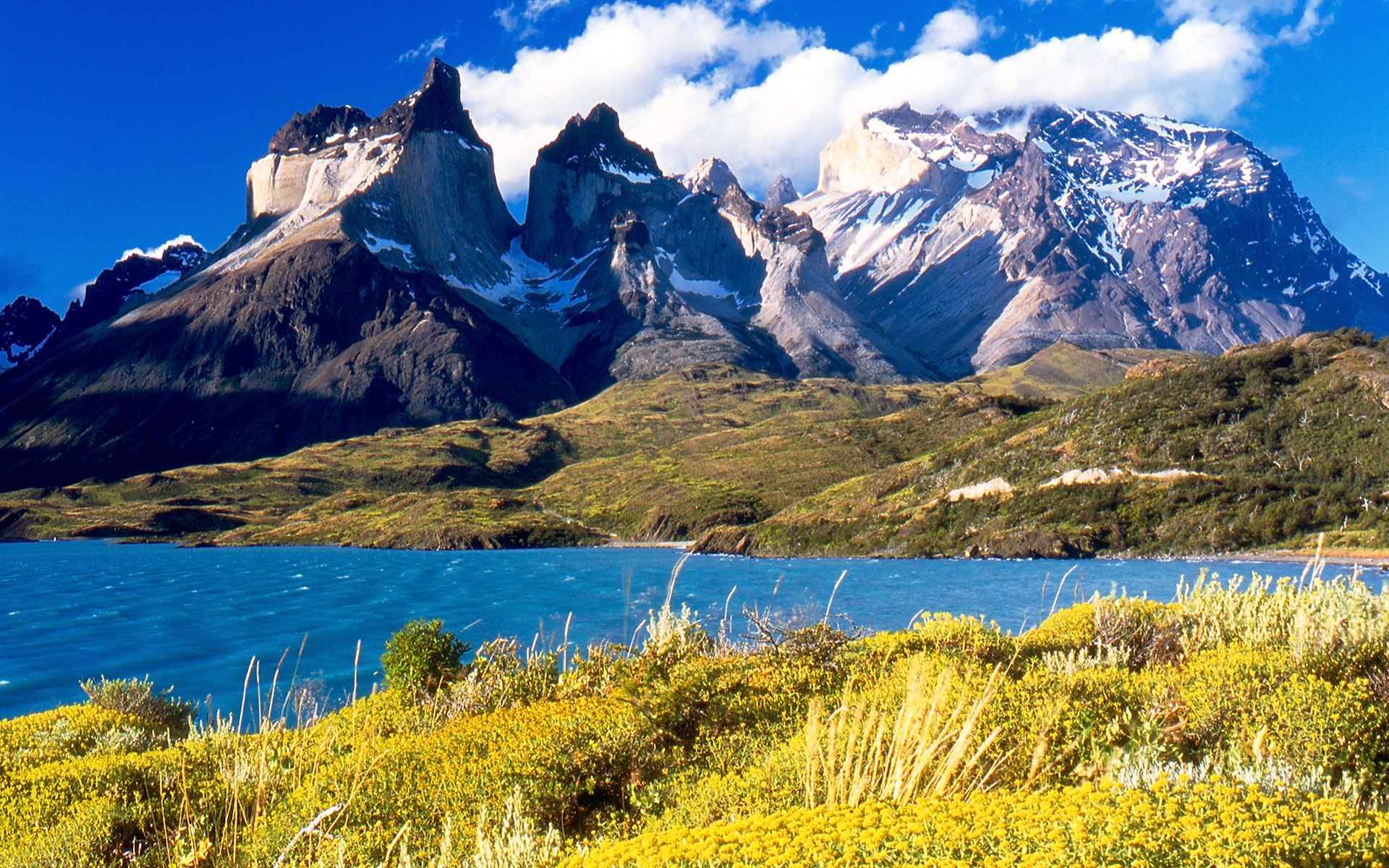
Torres Paine: five thousand years of vegetation history

dominated forests up to 570 years before present, declining towards the end of the nineteenth century product of an intense fire.

New palynological reconstruction work summarizes the history of climate and vegetation of the last 5000 years near Torres del Paine (51 ° S). The registration of Moreno and colleagues realize an expansion of forests dominated by Nothofagus from 5 thousand years ago. Forests dominate the landscape until 570 years ago, at which time begins a rapid decline in the late nineteenth century product of an intense fire. The emergence of Rumex acetocella in the latter period documents the invasion of alien species introduced by European settlers. The authors associated vegetation changes, fire occurrence and dynamics of Patagonian glaciers to changes in intensity of westerly winds which are responsible for precipitation and wind speed in the southern hemisphere.

Fuente:
Moreno, P.I., Francois, J.P., Villa-Martinez, R.P., & Moy, C.M. (2009) Millennial-scale variability in Southern Hemisphere westerly wind activity over the last 5000 years in SW Patagonia. Quaternary Science Reviews , 28 , 25-38.
DOI: 10.1016/j.quascirev.2008.10.009


Photo: Wikimedia Commons